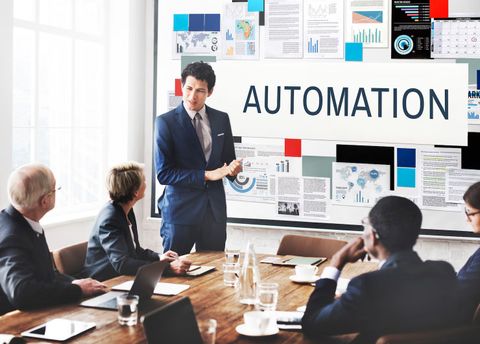
AI Automation in Offices: Transforming the Future of Workplace Efficiency
AI Automation in Offices is changing how modern workplaces operate every single day. From managing repetitive tasks to improving decision-making, artificial intelligence is helping organizations work faster and smarter. Many businesses are now adopting AI-powered systems to reduce manual effort and increase productivity across different departments.
In today’s fast-moving digital world, companies need efficient systems that can handle large amounts of data, communication, and operations smoothly. AI Automation in Offices brings intelligent tools into daily workflows, making processes more organized, accurate, and time-efficient without adding complexity for employees.
What is AI Automation in Offices
AI Automation in Offices refers to the use of artificial intelligence technologies to handle routine office tasks, streamline workflows, and support decision-making processes. It combines machine learning, natural language processing, and data analysis to perform tasks that usually require human effort. This includes managing emails, scheduling meetings, organizing data, and generating reports.
In simple terms, it acts like a smart digital assistant that works behind the scenes in an office environment. Instead of manually handling repetitive work, employees can rely on intelligent systems to complete tasks more efficiently. This helps create a more organized and productive workplace where teams can focus on meaningful work.
How AI Automation in Offices Works
AI Automation in Offices works by integrating intelligent software systems into daily business operations, where they collect data, analyze patterns, and execute tasks automatically based on predefined rules or learned behavior. These systems continuously improve their performance by learning from previous actions and user interactions, making office workflows smoother and more efficient over time.
Key Benefits of AI Automation in Offices
AI Automation in Offices brings several advantages that help organizations improve productivity and reduce manual workload. It enhances accuracy, speeds up processes, and supports better decision-making.
- Improves workplace productivity by reducing repetitive tasks
- Enhances accuracy in data handling and reporting
- Supports faster communication and workflow management
- Helps teams focus on strategic and creative work
- Strengthens decision-making through data insights
- Reduces human errors in routine operations
- Improves overall operational efficiency
Practical Examples or Use Cases
Below are real-world applications of AI Automation in Offices across different workplace functions:
| Category | Function | Example Use Case |
|---|---|---|
| Communication | Email sorting and response handling | Auto-organizing inbox and prioritizing messages |
| Scheduling | Calendar management | Automatically setting meeting times based on availability |
| Data Management | Data entry and processing | Extracting and organizing information from documents |
| Customer Interaction | Chat-based support systems | Responding to common queries through smart chat tools |
| Reporting | Performance tracking | Generating daily or weekly performance summaries |
| Document Handling | File organization | Categorizing and storing documents automatically |
Tips or Best Practices
- Start with small automation tasks before scaling to complex workflows
- Regularly monitor system performance for accuracy and improvements
- Train employees to work effectively alongside AI-powered tools
- Ensure data security measures are properly implemented
Common Mistakes to Avoid
One common mistake organizations make is trying to automate every process at once without proper planning. This can lead to confusion, inefficiency, and poor workflow structure. Another mistake is ignoring employee training, which can reduce the effectiveness of AI systems and limit their full potential in office environments.
Future Trends or Insights
AI Automation in Offices is expected to evolve rapidly in the coming years, becoming more intelligent and deeply integrated into workplace systems. Businesses will increasingly rely on AI to handle complex operations with minimal manual input.
- Greater use of predictive analytics for business planning
- Expansion of voice-based office assistance tools
- Smarter workflow integration across multiple platforms
- Increased personalization in workplace automation systems
- More adaptive learning systems that improve continuously
Frequently Asked Questions (FAQ)
1. What is AI Automation in Offices used for?
It is used to simplify office tasks such as scheduling, data management, communication, and reporting through intelligent systems.
2. Is AI Automation in Offices difficult to implement?
No, many modern tools are designed to integrate smoothly into existing office systems with minimal disruption.
3. Can AI Automation replace human workers?
No, it is designed to support human work by handling repetitive tasks, not replace human creativity and decision-making.
4. How does AI improve office productivity?
It reduces manual effort, speeds up workflows, and improves accuracy in everyday tasks.
5. Is AI Automation suitable for small organizations?
Yes, it can be adapted to different business sizes and scaled based on operational needs.
Conclusion
AI Automation in Offices is becoming a key part of modern workplace transformation. It helps organizations streamline operations, reduce manual workload, and improve overall efficiency. As technology continues to evolve, AI will play an even more important role in shaping how offices function.
The future of work will rely heavily on intelligent systems that support human effort and improve productivity. Businesses that adapt early to AI Automation in Offices will be better prepared for long-term growth and digital advancement.