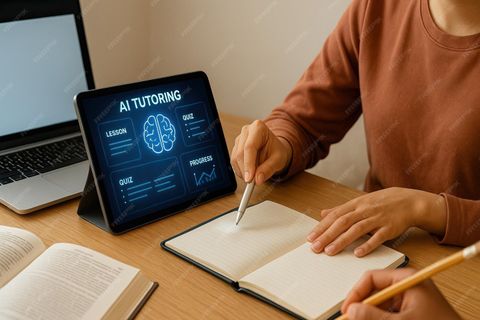
AI for Skill Development: A Smarter Way to Build Future-Ready Skills
AI for Skill Development is reshaping how people learn, practice, and grow in today’s fast-changing digital world. Traditional learning methods often follow a fixed structure, where every learner is expected to move at the same pace. However, modern learners have different goals, different backgrounds, and different learning speeds. This is where artificial intelligence is making a major difference by offering personalized and adaptive learning experiences that match individual needs.
In recent years, industries have started evolving at a very fast speed, and new tools, platforms, and technologies are emerging almost every day. Because of this, continuous learning has become essential. AI for Skill Development helps learners stay relevant by guiding them through customized learning paths, identifying weak areas, and suggesting the right type of practice at the right time. This makes learning more effective, engaging, and practical for real-world application.
What is AI for Skill Development
AI for Skill Development refers to the use of artificial intelligence systems to help individuals learn new skills and improve existing abilities in a more structured and personalized way. Instead of following a fixed learning path, AI analyzes user behavior, performance, and preferences to create a learning journey that fits the individual. This allows learners to focus more on areas where they need improvement while skipping content they already understand well.
In simple terms, AI for Skill Development works like a smart learning companion that continuously observes how you learn and adapts accordingly. It can detect your strengths, identify your weaknesses, and adjust the difficulty level of lessons based on your progress. This creates a smoother and more comfortable learning experience, especially for beginners who may feel overwhelmed by complex topics.
This approach is widely used in modern education platforms, digital training systems, and professional learning environments. It helps bridge the gap between theoretical knowledge and practical understanding by providing learners with interactive and customized learning support.
How AI for Skill Development Works
AI for Skill Development works by collecting data from user interactions, analyzing learning patterns, and using intelligent algorithms to create a personalized learning experience that evolves continuously based on performance, feedback, and progress over time in order to make skill-building more effective and adaptive.
Key Benefits of AI for Skill Development
AI for Skill Development provides a wide range of benefits that improve both learning speed and quality. It helps learners stay focused, understand topics more clearly, and build confidence in their abilities.
- Personalized learning paths based on individual performance
- Better understanding of complex topics through simplified explanations
- Real-time progress tracking and performance insights
- Improved engagement through interactive learning experiences
- Adaptive difficulty levels that match learner capability
- Faster skill improvement through focused practice sessions
- Continuous motivation through progress-based feedback
- Reduced learning confusion with structured guidance
- Stronger retention of knowledge through repeated reinforcement
- Flexibility to learn at an individual pace without pressure
Practical Examples or Use Cases
AI for Skill Development is used across multiple fields, helping learners, professionals, and organizations improve knowledge and performance in practical ways. Below are real-world examples of how it is applied.
| Category | Function | Example Use Case |
|---|---|---|
| Language Learning | Improves speaking and writing skills | AI systems that correct grammar, pronunciation, and sentence structure in real time |
| Programming | Builds coding knowledge step by step | Platforms that guide users through coding challenges and debug errors instantly |
| Corporate Training | Enhances employee capability | Systems that suggest training modules based on employee performance patterns |
| Creative Design | Improves visual creativity skills | Tools that recommend layout improvements and color combinations |
| Academic Learning | Supports student education | AI tutors that explain subjects like math and science in simple terms |
| Communication Skills | Improves speaking confidence | Simulation tools that provide feedback on tone, clarity, and expression |
| Data Analysis | Builds analytical thinking | AI systems that guide users through interpreting data sets and charts |
| Project Management | Improves planning skills | Tools that suggest task prioritization and workflow improvements |
Tips or Best Practices
- Start with clear learning goals to stay focused and motivated
- Practice regularly to reinforce concepts learned through AI systems
- Use feedback from AI tools to improve weak areas consistently
- Combine AI-based learning with real-world application for stronger understanding
Common Mistakes to Avoid
One common mistake learners make is relying too heavily on AI tools without practicing independently. While AI for Skill Development provides guidance and structured learning, real improvement happens when learners actively apply what they learn in practical situations. Another mistake is skipping foundational concepts and jumping directly into advanced topics, which often leads to confusion and slow progress. Many learners also fail to review feedback provided by AI systems, missing important opportunities for improvement. A balanced approach that combines AI guidance with personal effort is the most effective way to build strong and lasting skills.
Future Trends or Insights
AI for Skill Development is expected to become even more advanced and deeply integrated into education and professional training systems in the coming years. As technology continues to evolve, learning experiences will become more immersive, personalized, and closely aligned with real-world demands.
- Increased use of adaptive learning systems that adjust in real time
- Expansion of virtual simulation environments for practical training
- More advanced recommendation systems based on behavior analysis
- Growth of voice-based and conversational learning assistants
- Integration of AI learning tools with workplace performance systems
Frequently Asked Questions (FAQ)
1. What makes AI for Skill Development different from traditional learning?
AI for Skill Development offers personalized learning paths that adjust according to each learner’s progress, unlike traditional methods that follow a fixed structure.
2. Can beginners use AI for Skill Development easily?
Yes, most AI-based learning systems are designed to be simple and beginner-friendly, making it easy for anyone to start learning.
3. Does AI for Skill Development only focus on technical skills?
No, it supports a wide range of skills including communication, creativity, problem-solving, and academic learning.
4. How does AI improve learning speed?
It identifies weak areas quickly and focuses more on those topics, reducing unnecessary repetition and saving time.
5. Is AI for Skill Development useful for professionals?
Yes, professionals can use it to upgrade their skills, stay updated with industry trends, and improve performance in their roles.
Conclusion
AI for Skill Development is becoming an essential part of modern education and professional growth. It offers a smarter, more flexible, and highly personalized way of learning that adapts to individual needs. Instead of following a one-size-fits-all approach, learners can now progress at their own pace with guided support that makes complex topics easier to understand.
As industries continue to change and new skills become important, continuous learning will play a major role in success. AI-based learning systems will help individuals stay prepared for future challenges by providing better guidance, structured learning paths, and real-time improvement insights. This makes AI for Skill Development a powerful tool for anyone looking to grow in the digital age.