AI in Agriculture: How Smart Technology is Transforming Modern Farming
Agriculture has always been the backbone of human civilization. For centuries, farmers have relied on experience, weather patterns, and traditional techniques to grow crops and manage livestock. However, modern challenges such as climate change, growing population demands, and limited natural resources are pushing the agriculture industry to adopt smarter solutions. One of the most impactful innovations helping farmers today is artificial intelligence.
AI in Agriculture is changing how farms operate by making farming more data-driven and efficient. With the help of sensors, satellite images, machine learning, and automated systems, farmers can now monitor crops, analyze soil conditions, and predict weather patterns with greater accuracy. This transformation is helping improve productivity while also supporting sustainable farming practices.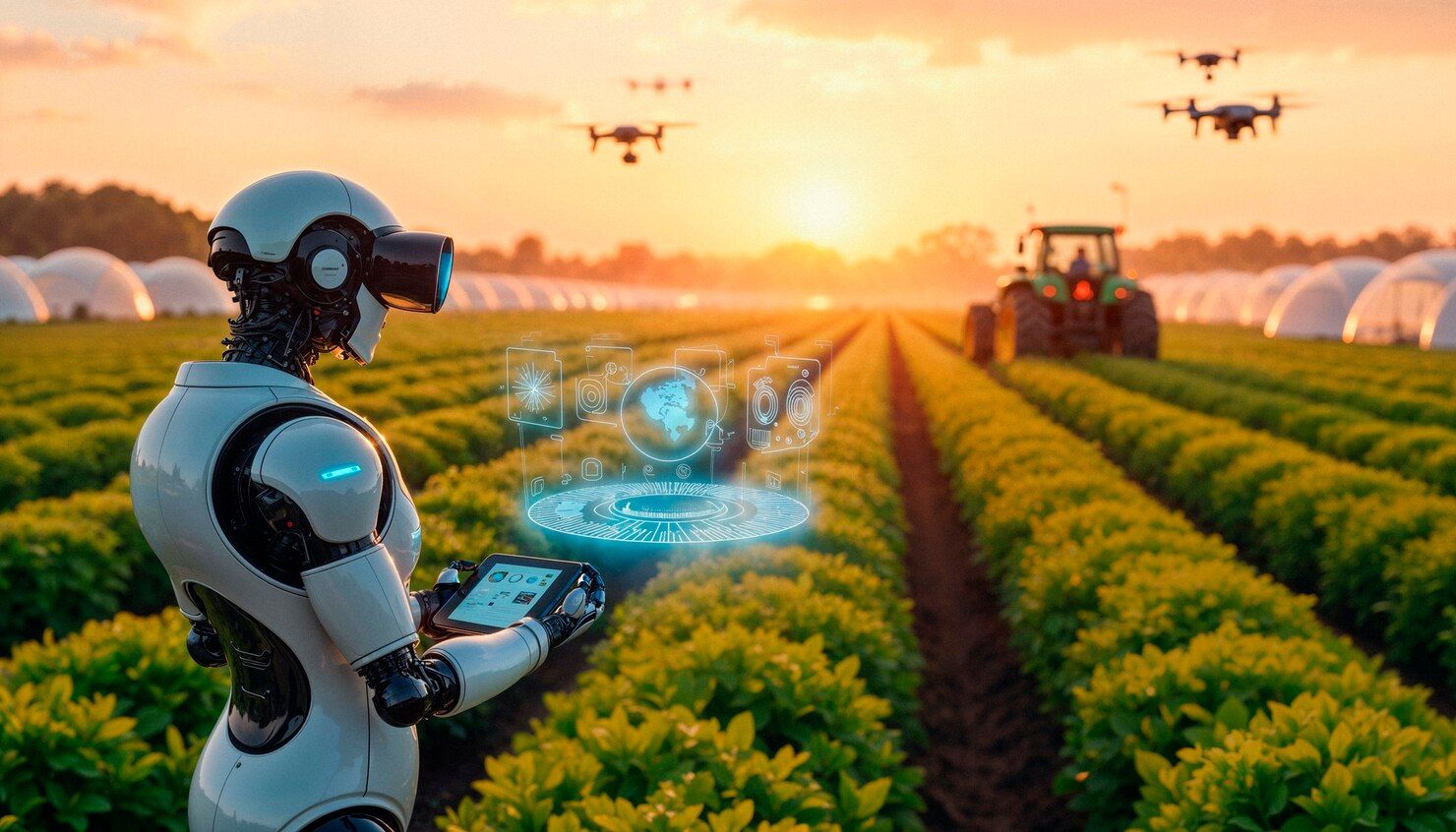
What is AI in Agriculture
AI in Agriculture refers to the use of artificial intelligence technologies to improve farming activities. These technologies analyze large amounts of agricultural data and help farmers make smarter decisions about planting, irrigation, pest control, and harvesting. Instead of relying only on traditional methods, farmers can now use intelligent tools that learn from patterns and provide helpful insights.
The main goal of AI in Agriculture is to make farming more efficient and sustainable. By using technologies such as machine learning, computer vision, and predictive analytics, farms can reduce resource waste, increase crop productivity, and improve overall farm management. These systems work by collecting data from fields and processing it to generate useful recommendations for farmers.
How AI in Agriculture Works
AI in Agriculture works by collecting data from various sources such as soil sensors, weather stations, drones, and satellite imagery. This data is then processed using artificial intelligence algorithms that identify patterns, detect problems, and predict outcomes. For example, an AI system can analyze crop images to identify plant diseases or evaluate soil moisture levels to recommend irrigation timing. By transforming raw data into useful insights, farmers can make better decisions that improve crop health and farm productivity.
Key Benefits of AI in Agriculture
AI in Agriculture brings many advantages that help farmers manage their fields more efficiently. By using intelligent technologies, agricultural operations can become more accurate, sustainable, and productive.
Benefits include:
• Better crop monitoring and early detection of plant diseases
• Improved irrigation management through soil moisture analysis
• Higher crop productivity through data-driven farming decisions
• Reduced waste of water, fertilizers, and other resources
• Faster identification of pest infestations
• Smarter farm planning using weather and climate predictions
These benefits help farmers reduce uncertainty and manage their farms with greater confidence.
Practical Examples or Use Cases
AI technology is already being used in many agricultural applications around the world. The following table shows some common real-world uses of AI in Agriculture.
| Category | Function | Example Use Case |
|---|---|---|
| Crop Monitoring | Uses computer vision to analyze plant health | Drone images identify nutrient deficiencies in crops |
| Precision Farming | Analyzes soil and environmental data | AI recommends optimal planting schedules |
| Pest Detection | Detects insects or plant diseases early | AI identifies pest damage through plant image analysis |
| Irrigation Management | Monitors soil moisture and weather data | Smart irrigation adjusts water levels automatically |
| Harvest Prediction | Predicts crop yield using data models | Farmers estimate harvest output before harvesting |
| Livestock Monitoring | Tracks animal health and behavior | Sensors detect unusual activity in farm animals |
These applications help farmers make more informed decisions while improving farm efficiency.
Tips or Best Practices
• Start by using AI tools for simple tasks like crop monitoring or weather analysis.
• Collect accurate farm data to help AI systems produce reliable insights.
• Combine AI tools with traditional farming knowledge for better results.
• Continuously review data reports to improve farm management strategies.
Common Mistakes to Avoid
One common mistake beginners make when adopting AI in Agriculture is expecting immediate results without proper data collection or system setup. AI tools depend heavily on accurate data, so poor-quality data can lead to misleading insights. Another mistake is relying entirely on technology without combining it with practical farming experience. Farmers should treat AI as a decision-support tool rather than a complete replacement for human judgment. Proper training, data accuracy, and gradual implementation are essential for successful adoption.
Future Trends or Insights
The future of AI in Agriculture looks promising as new technologies continue to evolve. Artificial intelligence will play a major role in improving sustainability, productivity, and global food security.
Some emerging trends include:
• Autonomous farming machines that perform planting and harvesting tasks
• AI-powered climate prediction models for smarter crop planning
• Advanced crop disease detection using computer vision
• Smart farm ecosystems that connect sensors, drones, and AI systems
• Data-driven precision agriculture that optimizes every stage of farming
These advancements will help farmers adapt to changing environmental conditions and produce food more efficiently.
Frequently Asked Questions (FAQ)
1. What is the main purpose of AI in Agriculture?
The main purpose of AI in Agriculture is to help farmers make better decisions using data analysis, automation, and predictive insights.
2. Can AI help detect plant diseases?
Yes, AI systems can analyze images of crops and identify early signs of diseases or pests, helping farmers respond quickly.
3. Is AI in Agriculture only useful for large farms?
No. Small and medium farms can also benefit from AI tools such as crop monitoring systems, soil analysis tools, and weather prediction platforms.
4. Does AI replace farmers?
AI does not replace farmers. Instead, it supports them by providing insights and automation that improve farm management.
5. Why is AI important for the future of farming?
AI helps improve efficiency, reduce waste, and increase crop productivity, which is essential for feeding a growing global population.
Conclusion
AI in Agriculture is reshaping modern farming by introducing smarter, data-driven methods for managing crops, soil, and livestock. With the help of artificial intelligence, farmers can monitor fields more effectively, detect problems earlier, and improve productivity while using resources more efficiently.
As the agriculture industry continues to evolve, the role of AI will become even more significant. By combining traditional farming knowledge with advanced technologies, the future of agriculture can become more sustainable, efficient, and resilient in the face of global challenges.